
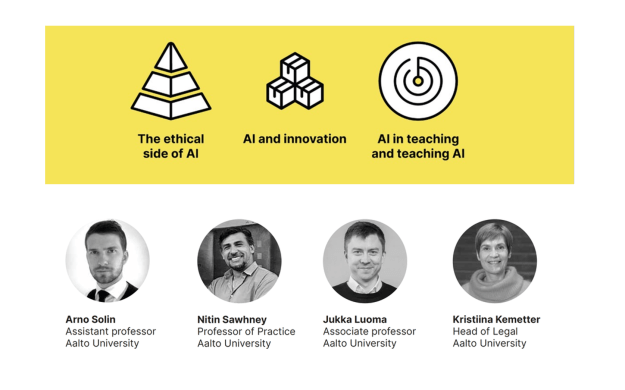
What are the implications of the EU Artificial Intelligence Act (AI Act) for research, teaching, and mediating the risks and benefits of AI innovations in society? I was invite to share my perspectives at this workshop with my colleagues Arno Solin, Jukka Luoma, and Kristiina Kemetter at Aalto University on Tuesday Feb 4th, 2025.
Article 4 of the EU AI Act, which came into effect on February 2, 2025, requires that organisations use AI responsibly in compliance with relevant ethical and regulatory guidelines. This legal milestone spurred this introduction to the EU AI Act in academic contexts and three keynotes by leading experts in the field.
The EU AI Act came into force on August 1st, 2024 with the aim to support innovation, encourage human-centric and trustworthy AI while ensuring a high-level protection of health, safety, and fundamental rights against the harmful effect of the AI systems.
What should European citizens know about the EU AI Act? How should researchers, teachers, and innovators develop and critically engage AI-based systems? How can we use generative and conversational AI tools safely and ethically? How do we develop AI-based systems in more inclusive, participatory, and responsible ways?
The event was organized by Enrico Glerean and the Aalto IT Services team, and supported by Aalto University Department of Computer Science, Aalto TUTA – Aalto University, Department of Industrial Engineering and Management, Finnish Center for Artificial Intelligence, Helsinki Institute for Information Technology and Finnish AI Region (FAIR EDIH).
Watch the video recording of my presentation (24 min)

More about the event: https://www.aalto.fi/en/events/aalto-ai-talks-ai-act-ethics-and-literacy-422025
 Nitin Sawhney