
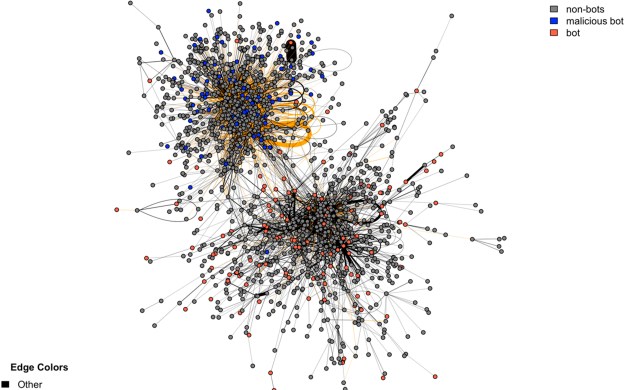
Our groundbreaking research has revealed critical insights into the role of malicious social media bots in shaping public health discourse during the COVID-19 pandemic, particularly on Twitter. The joint study, conducted over the past 3 years between Aalto University and the Finnish Institute for Health and Welfare (THL), was led by our senior researcher Ali Ünlü, Sophie Truong and THL collaborator Tuukka Tammi, with several journal publications out this year.
Malicious bots increased significantly during the pandemic. The operation of bots – i.e. programs imitating human users – was particularly aggressive during the key measures undertaken by Finnish public health authorities including during the biggest information campaigns about corona vaccinations and instructions. This was evident in our study that analyzed 1.7 million tweets related to the topic of COVID-19 on Twitter/X in Finland over the course of three years.
Bots accounted for 22% of the messages, while normally bots produce about 11% of all content in Twitter/X. Of the identified bot accounts, 36% acted maliciously. In particular, they emphasized unintentional dissemination of misinformation. About 25% of all messages contained incorrect information, while roughly the same proportion expressed a negative attitude towards vaccines. The bots also proved to be adaptable; their messages varied according to the situation.
“The findings highlight how regular bots often align with governmental messaging, enhancing their credibility and influence, while malicious bots employ more aggressive and deceptive tactics. The malicious bots may amplify false narratives, manipulate public opinion, and create confusion by blurring the line between credible and noncredible sources,” says Ali Ünlü.
“This study represents a significant contribution to understanding the complex role of bots in public health communication, particularly in the context of a global health crisis. It highlights the dual nature of bot activity — where regular bots can support public health efforts, while malicious bots pose a serious threat to public trust and the effectiveness of health messaging. The research provides a roadmap for future studies and public health strategies to combat the ongoing challenge of misinformation in the digital age,” concludes Nitin Sawhney, Professor of Practice, Aalto University Department of Computer Science.
The study was conducted as part of the joint Crisis Narratives research project between Aalto University and Finnish Institute for Health and Welfare (THL), and was funded by a grant awarded to us by the Research Council of Finland | Suomen Akatemia (2020-2024).
THL Press Release: https://thl.fi/en/-/malicious-social-media-bots-increased-significantly-during-the-covid19-pandemic-and-continue-to-influence-public-health-communication
Research article:
Unlu, A., Truong, S., Sawhney, N., & Tammi, T. (2024). Unveiling the Veiled Threat: The Impact of Bots on COVID- 19 Health Communication. Social Science Computer Review.
 Nitin Sawhney